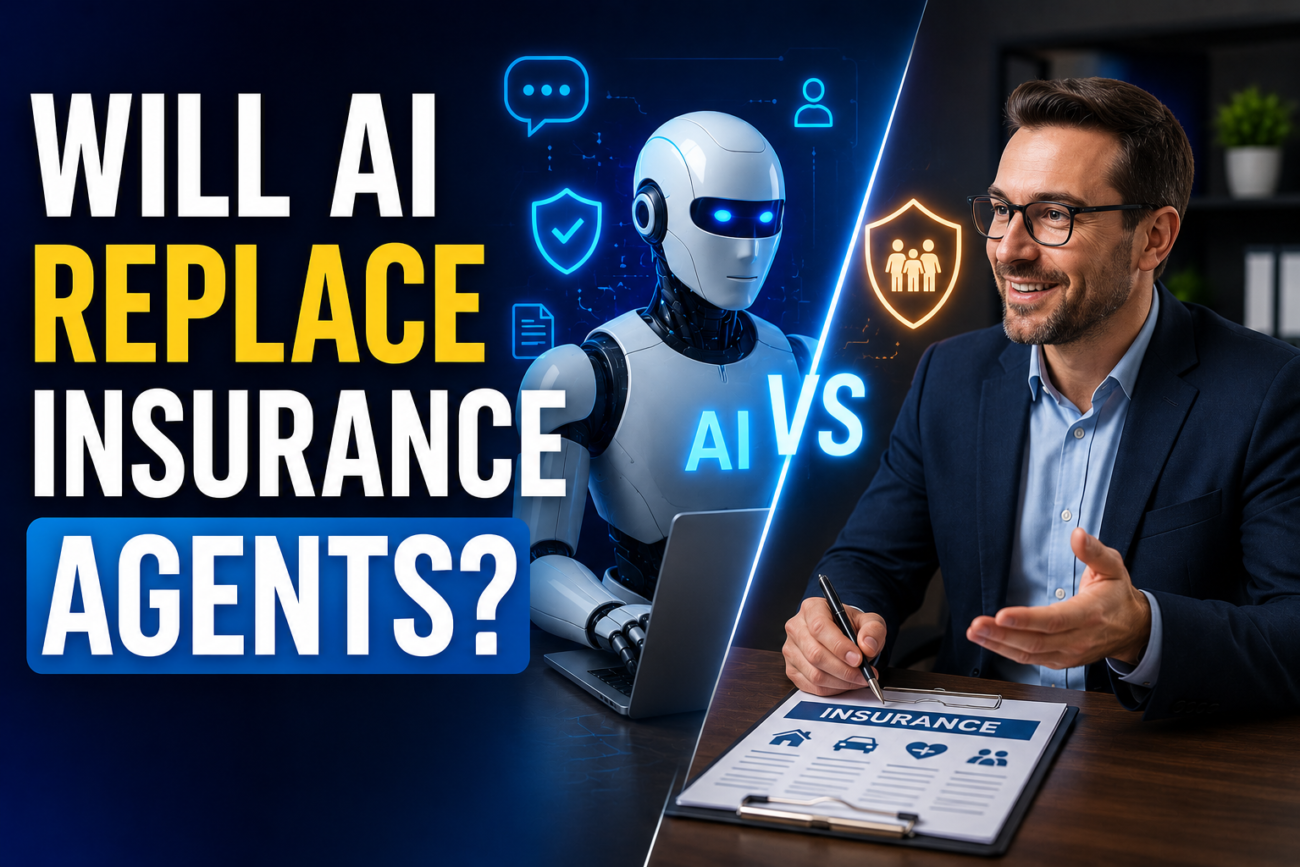
No, not as a whole, though the easy, standardized end of the job is genuinely shrinking. The U.S. Bureau of Labor Statistics projects insurance sales agent roles to grow about 4% through 2034, roughly in line with the average for all occupations, even as it flags real automation pressure on the simpler side of the work. The honest line through almost every serious analysis on this is the same: AI is taking over high-volume, standardized tasks, while judgment-heavy, relationship-driven work is holding up.
Where AI Has Already Taken Over
Simple, standardized policies. Quoting and binding a straightforward personal auto or renters policy is exactly the kind of repetitive, rules-based task AI handles well. Several insurers now process these in minutes rather than days.
Claims intake and fraud detection. Machine learning models flag suspicious claim patterns, and natural language processing scans claim notes for red flags, catching fraud earlier while keeping the process fair for honest customers.
Underwriting support for standard cases. McKinsey research has projected that AI could handle up to 80% of routine underwriting for standard personal and small-business products by 2030. That doesn’t mean underwriters disappear, their role shifts toward the more complex cases that don’t fit a standard template, plus building and refining the systems doing the automated work.
After-hours and routine customer contact. AI-driven virtual receptionists and chatbots now handle scheduling, basic questions, and follow-ups outside business hours, work that used to either wait until morning or required someone on call.
Where AI Genuinely Struggles
Complex commercial and specialty lines. Commercial property, casualty, professional liability, and workers’ compensation policies involve negotiated terms, multi-year relationships, and risk engineering that doesn’t reduce to a standardized form. BLS data shows demand concentrated specifically in this commercial and specialty segment, exactly where automation pressure is weakest.
Claims advocacy when something’s actually gone wrong. Getting a stuck or disputed claim moving again is one of the harder things to automate, since it depends on relationships with adjusters, persistence, and judgment calls that don’t have a clean rule to follow. That kind of advocacy compounds over years of an agent’s relationships and reputation, which is part of why it’s resistant to replacement.
High-stress, in-the-moment human support. A client calling in a panic after a fire or major loss doesn’t want to fill out a claims portal form. They want a person who already knows their policy, has already started making calls, and can say they’re on the way. That’s a genuinely human moment current AI tools aren’t built to replace.
The Framing That Keeps Showing Up Across the Industry
A common way this gets summarized: AI handles the roughly 80% of tasks that are repetitive and data-heavy, freeing agents to spend their time on the 20% of cases that genuinely require human judgment. You’ll find some version of this 80/20 split repeated across multiple independent industry sources, which suggests it’s a real, broadly observed pattern rather than one company’s marketing framing. The practical takeaway agents are increasingly hearing: the agents most at risk aren’t agents in general, they’re specifically the ones competing with a carrier’s automated quote engine on simple, standardized business rather than moving toward the complex, judgment-rich work that AI doesn’t reach.
What This Means If You’re in the Field (or Considering It)
If your day-to-day work is mostly quoting standard policies and handling routine renewals, that’s the part most exposed to automation, and it’s worth deliberately building expertise in commercial lines, claims advocacy, or specialty risk where relationships and judgment still carry real weight. If you’re curious how exposed your specific role might be based on your actual day-to-day tasks rather than just your job title, our Will AI Replace My Job? calculator walks through that breakdown. And if you’re weighing insurance against other fields with similar AI exposure questions, our piece on whether AI will replace cybersecurity jobs covers a field with a surprisingly similar pattern: routine tasks shrinking, while new and more complex roles grow around them.
FAQ
Is the insurance industry shrinking because of AI? No, overall job growth for insurance sales agents is projected to continue at a roughly average pace through 2034. The change is in what the work looks like day to day, not whether the field is disappearing.
Which part of an insurance agent’s job is most at risk from AI? Quoting and processing simple, standardized policies, the kind of high-volume, rules-based work that doesn’t require much judgment or a real relationship with the client.
Which part of the job is safest from automation? Complex commercial and specialty lines, claims advocacy when something’s gone wrong, and high-stress client support in the moment of an actual loss or emergency.
Should someone entering insurance today worry about job security? Not broadly, but it’s worth being intentional about which segment you build expertise in. Standard personal lines are where automation pressure is concentrated; commercial, specialty, and advisory-heavy work remain comparatively resilient.
Do underwriters specifically face more risk than agents? Routine underwriting for standard products is genuinely being automated at scale, but underwriters aren’t disappearing, their work is shifting toward complex cases and toward developing the systems that handle the standard ones.
Bottom Line
Insurance agents aren’t being replaced by AI as a category, they’re being sorted by it. The simple, repetitive parts of the job are shrinking fast, while the complex, relationship-driven, judgment-heavy parts are holding steady or even growing in relative importance. The practical move isn’t worrying about whether the job survives, it’s making sure your specific role sits on the right side of that line.
