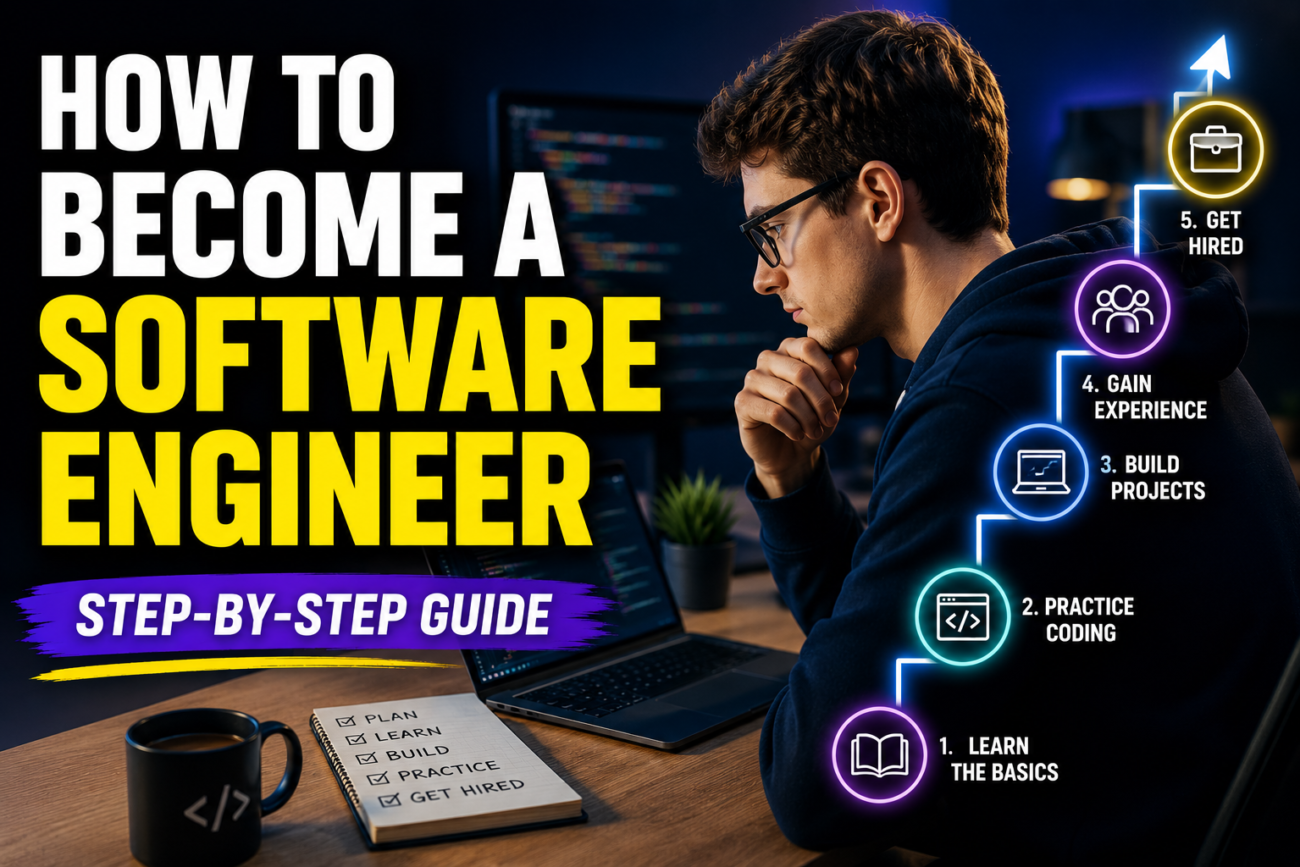
There are three legitimate paths in: a computer science degree (4 to 6 years), a coding bootcamp (typically 3 to 6 months), or self-taught learning (commonly 6 months to 2 years to job-ready, depending on consistency). None of these is the objectively correct choice, the right one depends on your timeline, budget, and how you personally learn best. What matters more than which path you pick is what you build along the way: real programming skills, a portfolio that proves you can use them, and the ability to survive a technical interview.
You Genuinely Don’t Need a Degree Anymore
This isn’t wishful thinking, it’s reflected in real hiring data. Roughly 27 to 30% of working software engineers don’t hold a college degree, and companies including Google, Apple, and IBM have removed formal degree requirements from many software engineering postings, leaning instead on skills-based hiring. Industry research has found a large majority of companies have shifted toward evaluating candidates by demonstrated skill rather than credentials alone.
That doesn’t mean a degree is worthless, it can still open doors faster at certain large companies and provides a broader theoretical foundation. But for most practitioner-track roles, it’s one valid path among several, not a gatekeeping requirement.
The Three Paths, Honestly Compared
Computer science degree. The longest path at 4 to 6 years, but it builds deep theoretical foundations (algorithms, systems, computational theory) alongside practical skills, and it’s still the path some larger or more traditional employers explicitly prefer. Worth it if you have the time and resources, and especially if you’re drawn to research, academia, or roles where deep theory genuinely matters.
Coding bootcamp. Intensive, project-focused programs typically running 3 to 6 months, designed specifically to get you job-ready fast with a portfolio in hand by the end. The trade-off is depth, bootcamps prioritize practical, employable skills over the broader theoretical grounding a degree provides, which occasionally shows up as a gap in technical interviews that lean heavily on computer science fundamentals.
Self-taught. The most flexible and lowest-cost path, using free resources like Harvard’s CS50, The Odin Project, or freeCodeCamp, but also the path requiring the most self-discipline, since there’s no built-in structure or deadline pushing you forward. Timelines vary widely, from a few months for basic proficiency to a year or more for genuine job readiness, depending heavily on consistency and how deliberately you practice.
The Skills That Matter Regardless of Path
Whichever route you take, these are non-negotiable:
One or two programming languages, learned well. Python, JavaScript, and Java remain the most commonly recommended starting points heading into 2026, each useful for different focuses (Python for backend and data-heavy work, JavaScript for anything web-facing, Java for enterprise and Android). Depth in one or two languages beats shallow exposure to five.
Data structures and algorithms. This is the part self-taught and bootcamp learners most commonly underweight, and it’s exactly what most technical interviews test directly: arrays, trees, graphs, sorting, searching, recursion. Skipping this step isn’t really optional if technical interviews are part of your target companies’ process, which they usually are.
Git and version control. A baseline professional skill, not an advanced one, used on essentially every real engineering team.
A portfolio of real projects. Three to five solid projects, ideally something that solves an actual problem rather than a generic tutorial clone, matter more to most hiring managers than where you studied. Include a short write-up for each: what problem it solves, what you used to build it, and what was genuinely hard about it. That last part shows the kind of thinking employers are actually trying to evaluate.
The 2026 Addition: AI Tool Fluency
This is a genuine shift worth knowing about going in, not a minor footnote. AI coding assistants have become a baseline part of professional software engineering workflows, and the skill of directing and critically evaluating AI-generated code, not just writing everything by hand, has become part of what “competent” looks like at entry level. Strong candidates now need to understand software architecture and system design well enough to evaluate whether AI-suggested code is actually right for the situation, not just whether it runs. This raises the practical bar somewhat (you can’t coast purely on memorized syntax), but it doesn’t change the underlying path, you still need the core skills above before AI fluency means anything.
A Quick Reality Check on Famous Dropout Stories
Bill Gates, Mark Zuckerberg, and a handful of other well-known self-taught or college-dropout success stories get cited constantly in this conversation. Worth being clear-eyed about these: they’re genuinely inspiring, but they’re extreme outliers from a different era of the industry, not a representative model for what a typical path into software engineering looks like today. The realistic, repeatable version of “no degree required” is the skills-based hiring data above, not a small handful of legendary exceptions.
Once You’re Building Skills, What’s the Job Actually Like?
If you’re still deciding whether this career fits you, it’s worth understanding what the day-to-day actually looks like before committing months or years to any of these paths. Our breakdown of what software engineers actually do covers the real mix of coding, design discussions, debugging, and collaboration, plus how AI tools have changed the role, useful context regardless of which path you end up choosing.
What It Pays Once You’re In
Entry-level compensation varies by path, location, and specialization, and rather than throw out a single number here, our software engineer salary calculator breaks it down by experience tier so you can get a realistic figure for your specific situation.
FAQ
Is it too late to become a software engineer in my 30s or 40s? No. Career switchers enter the field at all ages, and what matters to employers is demonstrated skill and a solid portfolio, not when you started.
Which path gets me a job fastest? Bootcamps are generally the fastest structured route, often 3 to 6 months to job-ready, though self-taught learners with strong discipline can move at a similar pace. A degree takes considerably longer but builds a broader foundation.
Do I need to know multiple programming languages? No, not starting out. Genuine depth in one or two languages is more valuable to employers than shallow familiarity with several. You can add languages later as a role requires them.
Will AI tools make it harder to break into software engineering? It raises the practical skill bar somewhat, since some of the simple, repetitive tasks beginners used to learn on are now AI-assisted, but it hasn’t eliminated entry-level hiring. Understanding systems deeply and being able to direct and evaluate AI output is becoming part of the expected skill set.
Is a bootcamp worth the cost compared to free self-taught resources? It depends on how much structure and accountability you personally need. Bootcamps cost real money but provide a built-in timeline, mentorship, and a built-in portfolio project; free resources cost nothing but require you to build that structure yourself.
Bottom Line
Pick the path that fits your actual timeline and learning style rather than debating endlessly over which one is theoretically best, all three produce working software engineers every year. What separates people who land the job from people who don’t isn’t the path itself, it’s whether you actually build the core skills, a real portfolio, and interview readiness along the way.
):
